CoReNum
Digital reference collection in archaeology
Scientific responsibility :
- Pierre Allard
- Nathalie Le Tellier-Becquart
- Marjan Mashkour
Methodological axes :
Thematic fields :
Disciplinary sectors :
Funding :
- DIM PAMIR
- CNRS
Project ID : IDF-DIM-PAMIR-2025-10-001
Summary :
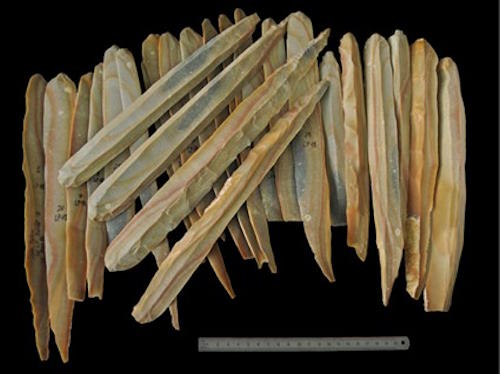
UMR TEMPS, resulting from the merger of two research teams established by A. Leroi-Gourhan and J. Tixier, is the heir to a set of historical reference collections, some of which were built up over several decades (the Jacques Tixier Technothèque, the Francine David – Thérèse Poulain osteological collection). Others are of more recent construction and are sometimes linked to ongoing research programmes (modern Norwegian reindeer, lithic use-wear analysis from Prehistoric Ethnology, malacological collection, Paris Basin lithothèque, reference collections of basalt working techniques). These reference collections, used for both teaching and research purposes, are brought together within a dedicated platform with specific facilities. They benefit from the CORE project funded by the DIM PAMIR programme (Bignon-Lau, 2024), which aimed to carry out a systematic harmonisation of the organisation of the collections in their physical dimension—that is, ensuring they are quantitatively inventoried, qualitatively defined, and physically accessible for consultation. Ultimately, these objectives could only be achieved through the creation of a relational database, which forms the foundation for the consultation and use of the collections. The CoReNum project therefore aims to develop a relational database for the platform’s reference collections, as well as a digital interface for their consultation. The CoReNum project thus seeks to make this exceptionally rich body of documentation visible through the publication of a single database with different levels of access. Researchers, postdoctoral fellows, and doctoral students will be able to consult these collections in order to develop their research projects, as will teachers seeking pedagogical resources for their students. Finally, certain collections or parts of collections will serve as demonstrative or illustrative materials for the general public during events that fall within an open science approach (such as the European Archaeology Days or Heritage Days, and the Science Festival).
