KARMA
Khmer / Angkor: a physical and digital referential on copper metallurgy
Scientific responsibility :
- Brice Vincent
- Jean-Sébastien Gros
- David Bourgarit
- Ruven Pillay
- Marianne Segaud
Methodological axes :
Thematic fields :
Disciplinary sectors :
Funding :
- DIM PAMIR
- C2RMF
- Sosoro Museum (Cambodia)
Project ID : IDF-DIM-PAMIR-2026-7-002
Summary :
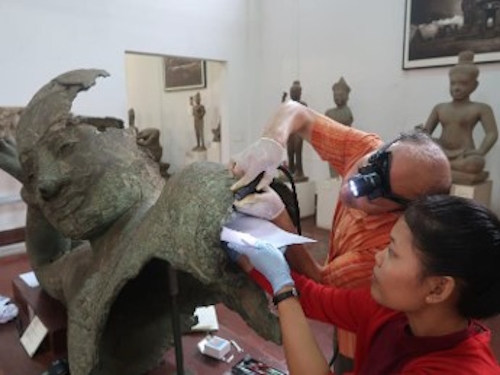
The scientific collaboration between the EFEO and the C2RMF with the support of many other partners has made it possible, by combining the study of museum collections with that of other collections resulting from recent archaeological discoveries, to assemble and contextualize a corpus documenting the entire chaînes opératoires related to copper production, from the mine to the finished object, in ancient and modern Cambodia (from the first millennium BCE to the early 20th century). This corpus includes more than 1,200 samples taken from various types of artefacts (bronze statues and objects, metal semi-products, production waste, decorative materials, and technical ceramics). It also brings together examination and analytical data collected over nearly the past 30 years on these same samples, as well as on unsampled artefacts (imaging, elemental and structural analyses). Experimental samples are also included. The aim of the KARMA project is to organize this corpus into two distinct yet closely related referentials: the physical referential KARMA-φ, which gathers the samples, and the digital referential KARMA-num, which compiles the associated digital data. The objective is to make both the samples and digital data more accessible and more widely. On the one hand, to facilitate their use within ongoing partnerships. On the other hand, a large dissemination will help promote and enrich research on metallurgy in Cambodia, and beyond, as the methodologies employed and the issues addressed have universal relevance (characterization of metallurgical processes, provenance and circulation of materials and know-how). Additionally, it will make it possible to showcase a heritage whose future is ambivalent—at once expanding (numerous discoveries and restitutions of illegally acquired artworks, construction of new museums, etc.) and under severe threat (strong land pressure on archaeological sites from agriculture and mining industry).
